
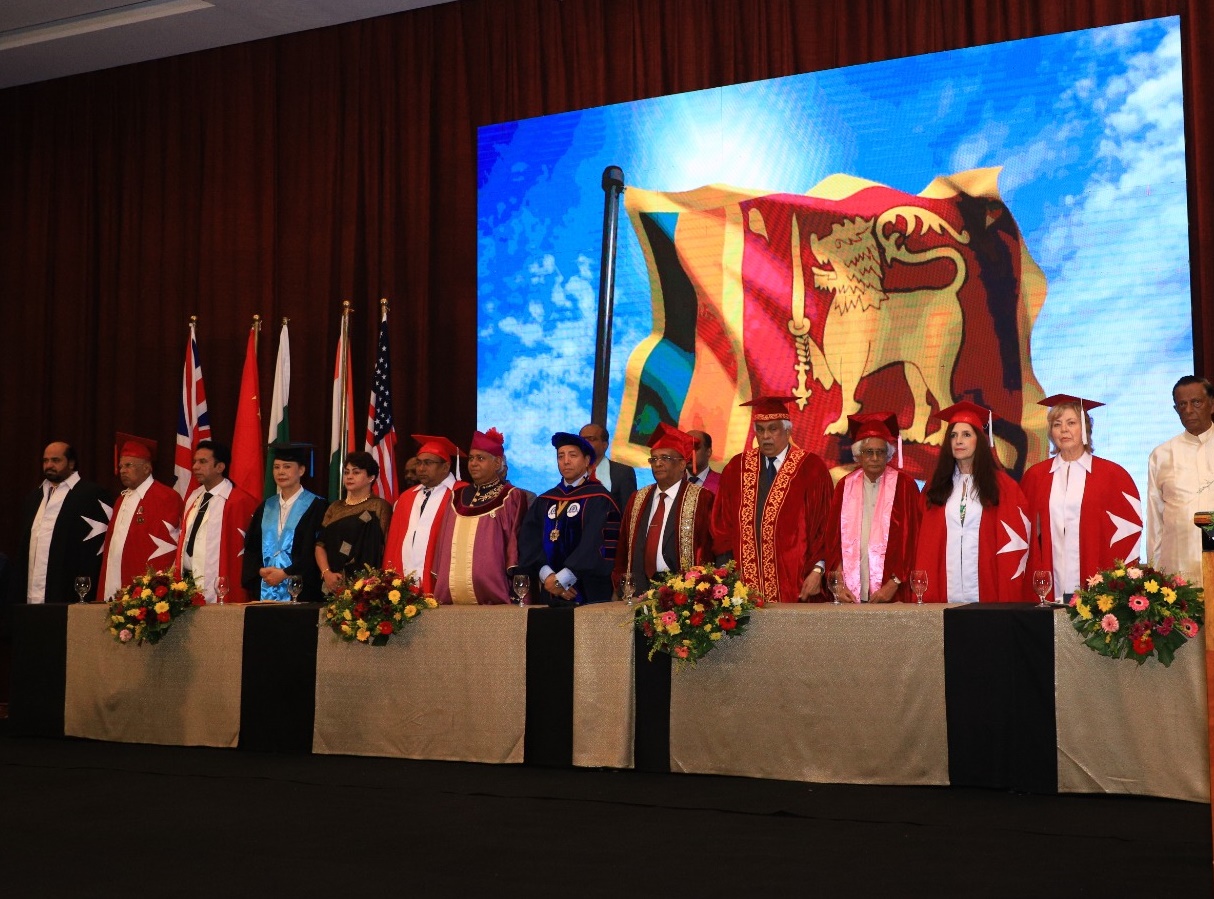
Senior Prof. Lakshman Madurasinghe MA.,MSc., PhD., DBA ., DSc., D Litt (USA), Attorney-at-Law., M. Inst Coun (Glasgow)., M. Inter Council of Psy (USA)., Chartered Fellow CIPD(Lond), is the Chairman of Medicina Alternativa- BOI, a sixty-year-old institution acclaimed as the global leader in Complementary Medicine, and the Global Consortium of Science and Technology, with branches in over 100 countries, over 2 million patients treated, and with over 150,000 trained practitioners. Medicina is a branch campus of Azteca University, North America. Medicina Co-Founder Dr Vicktor Inyushin Al Farabi University, Kazachstan introduced bioplasma as the 5th state of matter and with the development of heart coherence it would be the norm Medicina would promote during the 5th Industrial Revolution through which it is believed that we are now moving in the post-covid era. Prof.Lakshman is a Board Member, Senior Governor or Advisor in over ten global institutions.
With a broad scholarship, Prof.Lakshman had the unique distinction of being a key member of the research team, together with Prof.Anton Jayasuriya and Dr. Siran Deraniyagala, that brought to light the use of instruments that resembled acupuncture needles to treat humans and animals when such tools never existed elsewhere in the world. Its findings showed that modern “Homo Sapiens Sapiens’ existed in Sri Lanka over 35000 years ago perhaps hinting at the theory that the Garden of Eden existed at Adam’s peak from where modern man originated and migrated to other regions. Archaeological research done by experts in this field now has ample evidence to show that even as early as 123,000 BC, ancient humans lived in Sri Lanka: the oldest inhabitant in Sri Lanka in Pathirajawela, near Ambalantota.
In addition, he is also the Chairman of the Global Consortium of Science and Technology bringing under its purview departments of Nanotechnology, Neuroscience, Microbiology, Law and Software Engineering. He is a Board Member in several international institutions located in America, Europe, Mexico, Africa, Asia and Australia. He is the Senior Professor of Azteca University, North America. He is the pioneer of e-Consciouness and Manzhe symbol shown below. His research also extends to the use of music and ragas as a mode of therapy. Working closely with the Cambridge Centre for Music and Science-CMS, and Maharishi University, Vlodrop, Netherlands, he has tested Raga Shivaranjani- to treat patients with dementia and Alzheimer’s: Raga Dwijavanthi – to Quell paralysis and disorders of the mind: Raga Madhyamavati- to clear paralysis, giddiness, pain in legs/hands, etc; and the use of “Clair de Lune” – Debussy and “Piano Sonata No. 17 in D Minor (“The Tempest”)” – Beethoven to release Dopamine.

He is a Senior Scholar at Institutio Balear de la Historia (Spain), Fellow of Cambridge International Academics, Milton, Cambridge, England, a Senior Full Professor at Azteca University North America, Sri Lanka Academic Board Member of EDU Brussels accredited to the European Parliament, Head of the International Legal Secretariat of the Academy of Universal Global Peace USA – AUGP a 40-year-old 501 (C) 3 IGO and its Vice-Chancellor. He also functions as the Judicial Vicar and the Presiding Judge of the Synod of Global Apostolic Dioceses and Churches Inc USA.
Prof. Laksman is the Global Legal Advisor of Vaamaa Forex of the Pintus Group USA and the Senior Vice President of Legal of Global Consultancies LLC USA 90 State St STE 700 OFC 40 Albany, NY 12207, USA.
He is the Founder of Young Scientists University USA established in 2009 with branches in USA and Greece, and Secretary General of the Chamber of Chartered Java Professionals established in 2010. Professor is a Member of the World Jurist Association, Washington DC; the International Bar Association London, the Bar Association of Sri Lanka, and the Colombo Law Society, and speaks of therapeutic Jurisprudence globally.

The Chancery headed by Prof. Luxman Madurasinghe consists of several Institutions listed below. He is responsible for the functions and matters associated with Doctors, Professors, Researchers, Editors, and Staff. The Chairman is the primary contact point for all Foreign Universities and is responsible for all International communications, charters, negotiations and diplomatic relations with UN & European Union.
INSTITUTIONS COMING UNDER THE PURVIEW OF THE CHANCERY
- Medicina Alternativa ( BOI approved and registered with the UN – A Branch campus of Azteca University North America) – Founded in 1962 with branches in over 100 countries.
- Ecumenical, Medical, Humanitarian Order Knights of St John of Jerusalem Founded in 1048 AD- Knights and Members of Chancery– over 10,000 Knights in all Continents. With Medicina, it believes it must save humanity from a possible extinction of human civilization – sózontas tin anthropótita Σώζοντας την ανθρωπότητα caused by human divisiveness which has been exploited to bring about its own possible demise.
- Global Consortium of Science and Technology – Partnership of over 15 Global Institutions- Council Members and Staff.

 oiucm.org
You must be logged in to post a comment.